

Medically reviewed by Jacque Lovely, RN MN MBA PMP Reg# 74334 | Head of Western Operations at ATMA CENA
Registered psychologists can train in psychedelic-assisted therapy (PAT) and bring assessment, outcome measurement, and trauma-focused psychotherapy to the clinical team. This guide covers scope by province, Alberta’s College of Alberta Psychologists guideline, CPA-approved continuing education, and how psychologists join supervised multidisciplinary clinic models.
Key takeaways
- Psychologists cannot prescribe psychedelics or submit SAP applications. The College of Alberta Psychologists states that “diagnosing the need for specific psychedelic treatments and prescribing psychedelic medicines are outside the scope of psychological practice” and rest with a client’s physician, psychiatrist, or nurse practitioner.
- Alberta has the first formal provincial psychology PAP standard in Canada. The CAP Psychedelic-Assisted Psychotherapy Practice Guideline (June 2025) limits psychologists to preparation and integration roles, with dosing in a CPSA-accredited facility under a psychiatrist or a physician in consultation with a psychiatrist.
- Assessment and outcome measurement are the psychologist’s distinct contribution. Doctoral-level training in psychometrics and suitability screening maps directly onto the clinician-administered measures used in psychedelic trials.
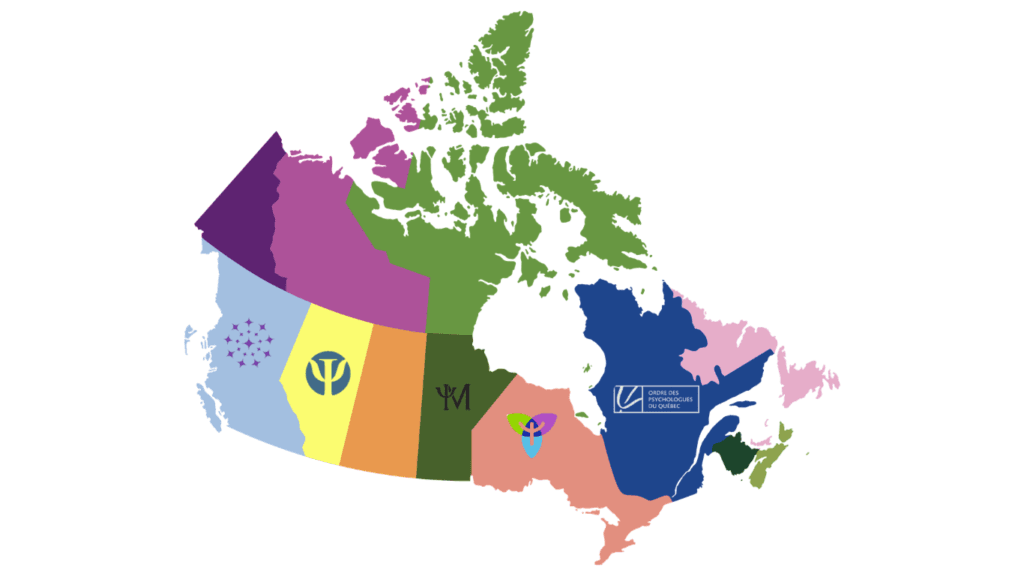
- “Psychologist” is a protected title in every province. Scope and master’s-level registration differ by province (CAP, CHCPBC, CPBAO, OPQ, PAM).
- CPA-approved continuing education is recognized nationally. In Ontario, CPBAO requires 50 hours per two-year cycle, including 10 hours of ethics and 5 hours of equity, diversity, and inclusion content.
Not sure how a psychologist pathway maps to your province and existing scope? Explore ATMA CENA’s training pathways or book a free information call.

Can Canadian Psychologists Practise Psychedelic-Assisted Therapy?
Yes, within scope. Registered psychologists in Alberta (CAP), British Columbia (CHCPBC), Ontario (CPBAO), Quebec (OPQ), and Manitoba (PAM) can be trained members of a psychedelic-assisted therapy team. They cannot prescribe psychedelics, administer controlled substances, or submit Health Canada Special Access Program applications on a patient’s behalf.
Within a clinical trial or a SAP-authorized program led by a physician or nurse practitioner, psychologists can deliver preparation psychotherapy, conduct suitability assessment, lead outcome measurement, and provide integration psychotherapy. Provincial rules decide which roles you can take and where.
Alberta is the only province with a formal psychology-college guideline. The College of Alberta Psychologists limits psychologists to preparation and integration work, with dosing supervised by a psychiatrist or a physician in consultation with a psychiatrist in a CPSA-accredited facility.
What sets psychologists apart on a PAT team is not the therapeutic relationship alone — which every regulated profession on the team contributes — but the assessment skill set. Doctoral-level training in standardized assessment, differential diagnosis, and psychometric administration positions psychologists to lead pre-treatment suitability screening and structured outcome measurement, two functions the field increasingly treats as core to safe, accountable practice.
What the CAP Guideline Means for Psychologists in Alberta
Alberta is the only Canadian province with a formal psychology-college guideline for psychedelic-assisted psychotherapy. The College of Alberta Psychologists issued its Psychedelic-Assisted Psychotherapy Practice Guideline in June 2025 — the first formal provincial psychology PAP standard in Canada. It confirms that prescribing and diagnosing the need for psychedelic treatment sit outside psychological scope, and it limits Alberta psychologists to preparation and integration psychotherapy. Dosing itself must occur in a CPSA-accredited facility under a psychiatrist, or a physician in consultation with a psychiatrist.
The guideline’s central scope statement is worth quoting directly:
“Diagnosing the need for specific psychedelic treatments and prescribing psychedelic medicines are outside the scope of psychological practice and ultimately rest with a client’s primary physician/psychiatrist and/or nurse practitioner.”
Alberta law reinforces this. The province restricts psychedelic-treatment-services providers to members of six named regulated colleges, and CAP is one of them, so Alberta psychologists are within scope for the therapeutic components of this work. The boundary is the dosing facility: under CPSA accreditation rules, the medical lead for a community psychedelic-assisted psychotherapy facility must be a psychiatrist or a physician in consultation with a psychiatrist.
The CAP guideline addresses knowledge of psychedelic medicines, safety considerations, the role of touch in psychedelic-assisted psychotherapy, and competence requirements. Review it in full at cap.ab.ca before working in this space.
The Provincial Picture: Protected Titles and Scope by College
“Psychologist” is a protected title in every Canadian province, but registration level and scope differ. Your regulator and your provincial framework together decide what training you need and what role you can take within PAT.
| Province | Regulator | Title(s) protected | PAP-specific guideline (May 2026) |
|---|---|---|---|
| Alberta | College of Alberta Psychologists (CAP) | Psychologist | Yes — CAP PAP Practice Guideline, June 2025 |
| British Columbia | College of Health and Care Professionals of BC (CHCPBC) | Psychologist (doctoral) | No — transitional PQPP in 2026 |
| Ontario | College of Psychologists and Behaviour Analysts of Ontario (CPBAO) | Psychologist (doctoral); Psychological Associate (master’s) | No PAP-specific guideline |
| Quebec | Ordre des psychologues du Québec (OPQ) | Psychologue | No PAP-specific guideline |
| Manitoba | Psychological Association of Manitoba (PAM) | Psychologist | No PAP-specific guideline |
A few province-level notes that matter for training decisions:
Alberta (CAP) is the only province with a published PAP guideline, and it applies to all registrants, including provisional psychologists.
British Columbia (CHCPBC) has not issued PAP-specific guidance. The former CPBC moved under CHCPBC in 2024, and a transitional Professional Quality Practice Program (PQPP) runs through 2026.
Ontario (CPBAO) registers psychologists at the doctoral level and psychological associates at the master’s level for independent practice. CPBAO has not issued PAP-specific guidance.
Quebec (OPQ) restricts “psychologue” to doctoral registrants and allows psychologists to practise psychotherapy without a separate permit.
Manitoba (PAM) registers psychologists and psychological associates. No PAP-specific guideline has been published.
Where no PAP-specific guideline exists, psychologists apply general scope-of-practice and competence rules, the federal SAP framework, and documented specialized training before taking on this work.
Why Assessment and Outcome Measurement Are the Psychologist’s Edge
Psychologists bring two capabilities to a PAT team that other non-prescribing clinicians generally do not: formal suitability assessment and structured outcome measurement. Doctoral-level training in psychometrics means psychologists can administer, score, and interpret validated instruments without external oversight, including the clinician-administered measures used as primary endpoints in psychedelic trials.
Pre-treatment assessment screens for contraindications such as psychosis-spectrum risk, dissociative disorders, and impulse-regulation concerns before a prescriber commits to a treatment plan. Outcome measurement at intake and follow-up supports program evaluation, safety monitoring, and regulatory accountability.
The trial evidence shows these instruments in routine use. The Phase 3 MAPP1 trial of MDMA-assisted therapy for severe PTSD used the Clinician-Administered PTSD Scale for DSM-5 (CAPS-5), administered by blinded independent assessors, as its primary outcome (Mitchell et al., 2021). Depression trials use the Montgomery-Åsberg Depression Rating Scale (MADRS) as a primary endpoint. In a Phase 2b dose-finding trial, a single 25 mg dose of psilocybin produced a mean MADRS reduction of roughly 12 points at week 3 in adults with treatment-resistant depression (Goodwin et al., 2022). A later randomized trial reported a sustained response in about 42% of adults with major depressive disorder who received 25 mg psilocybin (Raison et al., 2023).
Administering and interpreting these measures is squarely within psychological training. So is the clinical formulation that decides whether a given patient is a suitable candidate. On a PAT team, that work tends to fall to the psychologist, and the field treats it as central to safe practice rather than optional.
Pro tip: When you build your PAT competencies, lead with the assessment and measurement skills you already hold. Documenting a clear pre-treatment screening protocol and a consistent outcome-measurement battery is one of the most defensible contributions a psychologist can make to a multidisciplinary team, and it strengthens your competence record under any provincial framework.
Ketamine, Psilocybin, and MDMA: What Access Looks Like in Practice
Psychologists work across all three substance contexts, but access differs sharply, and that shapes how quickly you can move into active practice.
Ketamine is approved by Health Canada as an anaesthetic and prescribed off-label for depression, anxiety, PTSD, and chronic pain. It does not require a SAP application, so a trained psychologist can work alongside a prescribing physician or nurse practitioner sooner and more reliably than in any SAP-dependent context, subject to provincial rules. In Alberta, psychedelic-assisted psychotherapy must occur in a CPSA-accredited facility under psychiatrist or physician-in-consultation-with-psychiatrist oversight per the March 2026 CPSA guidance. Other provinces regulate off-label ketamine through their medical colleges.
Psilocybin and MDMA are restricted drugs. Patient access runs only through Health Canada’s Special Access Program, and only physicians and nurse practitioners can apply. Psychologists cannot submit SAP applications. Within a SAP-authorized program, a psychologist can serve as the preparation therapist, the integration therapist, or a non-prescribing therapist during dosing, and can lead the assessment and outcome-measurement work for the team.
There is a practical limit on SAP-dependent work. The Psychedelic Association of Canada documented approximately half as many SAP approvals year over year as of September 2025. For psychologists, that means opportunities to work with SAP-authorized psilocybin or MDMA patients remain limited even after training, and ketamine is usually the more reliable context for active practice today.

CPA-Approved CE and Your College’s Continuing-Competence Requirements
Continuing-education recognition for psychologists runs through the Canadian Psychological Association’s CE Approval Programme. A CPA-approved program is recognized nationally and can count toward your college’s continuing-competence requirements, though each college sets its own rules and you remain responsible for filing the right record with the right body.
CE credits: All ATMA CENA course credit values have been reviewed and confirmed by the relevant colleges.
| Regulator | Continuing-competence requirement | CPA-approved CE recognized? |
|---|---|---|
| CAP (Alberta) | Competence via continuing-competence program and peer review; training records serve as documentation | Yes |
| CHCPBC (BC) | Transitional PQPP in 2026; ongoing competence documentation expected | Yes |
| CPBAO (Ontario) | 50 hrs per 2-year cycle; 10 hrs ethics, 5 hrs EDI; max 10 hrs from any single activity | Yes |
| OPQ (Quebec) | CE governed by OPQ bylaws; psychologists may practise psychotherapy without a separate permit | Yes |
| PAM (Manitoba) | Set by PAM — verify directly | Yes |
CAP (Alberta) does not set a fixed CE-hour threshold. The June 2025 guideline implies psychologists must obtain specialized training before working in PAT, so your training records function as competence documentation.
CPBAO (Ontario) requires 50 hours of continuing professional development per two-year cycle, including at least 10 hours of ethics and jurisprudence and 5 hours of EDI content, with no single activity contributing more than 10 hours. PAT training counts as general continuing education, and its ethics content can help satisfy the jurisprudence minimum.
CHCPBC (BC) is in transition. Psychologists participate in transitional PQPP activities in 2026, with ongoing competence documentation expected rather than a fixed hour count.
The ATMA CENA Training Pathway for Psychologists
ATMA CENA’s training is pathway-based. Every pathway begins with the Foundations course, then builds into the Clinical Pathway for clinicians who will deliver the psychotherapy components of PAT.
| Course | Hours | CE Credits | Tuition (CAD) | Format |
|---|---|---|---|---|
| PAT Foundations | 14 hrs | 14 | $800 | Online (async) |
| Applied Clinical Practice in Psychedelic Therapy | 46 hrs | 46 | $4,200 | Online + practicum |
| Advanced Safety & Support Practices in PAT | 38 hrs | 38 | $3,500 | Hybrid |
| Supervised Learning Lab | 8 hrs | 8 | $1,000 | Small-group cohort (live) |
| KAT Immersive Experience (optional) | 3 days | Pending CE approval | $2,400 | In-person, Calgary only |
Clinical Pathway bundle (PAT Foundations + Applied Clinical Practice + Supervised Learning Lab): $5,400 (10% discount applied).
Prescriber Pathway bundle (PAT Foundations + Prescribing & Oversight in Psychedelic Therapy): $4,320 (10% discount applied).
Integrative Pathway bundle (PAT Foundations + Advanced Safety & Support Practices): $3,870 (10% discount applied).

For most psychologists who plan to deliver therapy within a PAT setting, the Clinical Pathway is the primary route, because it prepares you for the full arc of PAT including dosing-day support. Psychologists working with complex trauma, dissociation, and assessment-heavy caseloads typically fit this profile.
If your intended role is assessment and integration support rather than active therapy delivery, the Integrative Pathway is the more focused option.
The optional KAT Immersive Experience adds a three-day in-person experiential component at ATMA CENA’s Calgary clinic for those who want hands-on exposure to the full arc of a ketamine-assisted session before clinical practice. Maximum 10 participants; minimum enrollment required.
The published evidence on therapist training points to supervised practicum as the most valued component. Tai et al. (2021) evaluated a structured psilocybin therapist training program of 65 clinicians across Canada, the United States, and Europe. Trainees rated supervised participant care as the most beneficial and challenging part of the program. The cohort was predominantly psychologists and psychiatrists. The six-competency framework most training programs build on — including empathetic abiding presence, trust enhancement, and ethical integrity — was set out by Phelps (2017) and overlaps substantially with competencies already part of doctoral psychology registration.
Joining a Supervised Clinic Model: How Psychologists Work Within PAT Teams
Trained psychologists join PAT delivery in three main ways: as team members at an established clinical-trial site, through a SAP-authorized program led by a physician or nurse practitioner, or through a structured clinic network that handles the medical and regulatory infrastructure.
ATMA CENA’s CoCare program is built for the third route. CoCare lets clinicians who have completed at least 50 hours of Clinical Pathway training deliver preparation and integration psychotherapy with their own clients, while ATMA CENA’s clinical infrastructure handles ketamine prescribing, dosing-day medical oversight, and facility compliance. Registered Psychologists are an eligible designation, with provincial scope considerations applying.
Within these teams, psychologists often carry the suitability assessment and outcome-measurement responsibilities described earlier, in addition to delivering psychotherapy. Where unlicensed team members participate — such as supervised students or trained support staff — psychologists may be the supervising registrant, which carries additional professional responsibility under provincial scope rules.
Ready to bring psychedelic-assisted therapy into your existing practice? Learn how CoCare works or talk to an advisor about whether it fits your province and scope.

Frequently Asked Questions
Can a registered psychologist prescribe psychedelics in Canada?
No. Psychologists hold no prescribing authority in any province. Psilocybin and MDMA are accessible only through Health Canada’s Special Access Program, applied for by physicians or nurse practitioners. Ketamine is prescribed off-label by physicians. The College of Alberta Psychologists states that prescribing psychedelic medicines and diagnosing the need for them are outside psychological scope and rest with the client’s physician, psychiatrist, or nurse practitioner.
Can a psychologist do psychedelic-assisted therapy in Alberta?
Yes, within scope. The CAP June 2025 guideline limits Alberta psychologists to preparation and integration psychotherapy and requires specialized training first. Dosing must occur in a CPSA-accredited facility under a psychiatrist, or a physician in consultation with a psychiatrist. Psychologists are within Alberta’s regulated-provider list for these services; the boundary is the dosing facility and medical oversight, not the therapeutic role.
Which province has the clearest framework for psychologists?
Alberta. The CAP June 2025 Psychedelic-Assisted Psychotherapy Practice Guideline is the only formal Canadian psychology-college PAP standard as of May 2026. Other provinces operate under general competence and scope rules and the federal SAP framework. Psychologists in those provinces should document specialized training and confirm scope with their college before taking on PAT work.
Does completing training mean I can practise legally?
No. Training is one component. You also need confirmation from your psychology college that PAP is within your scope, documented supervised experience, and a working relationship with a prescribing physician or nurse practitioner. In Alberta, dosing additionally requires a CPSA-accredited facility with psychiatric oversight.
What can a psychologist do that other non-prescribing clinicians cannot?
Conduct formal psychological assessment and administer, score, and interpret validated outcome measures without external oversight. The clinician-administered instruments used in psychedelic trials — such as CAPS-5 for PTSD and MADRS for depression — are within psychological training. Pre-treatment suitability assessment and structured outcome measurement are the psychologist’s distinct contributions to a PAT team.
Do CPA-approved CE hours count toward my college’s requirements?
Generally yes. CPA-approved continuing education is recognized nationally and is the standard signal that a PAT program meets psychologist CE expectations. Each college sets its own continuing-competence rules, so confirm a specific program’s recognition with your registering body before enrolling, and keep your records.
What is the difference between the Clinical and Integrative pathways for psychologists?
The Clinical Pathway prepares you for the full arc of PAT including dosing-day support, and includes Applied Clinical Practice and the Supervised Learning Lab. The Integrative Pathway prepares you for preparation, assessment, and integration roles without dosing-day involvement. The right choice depends on your intended role, your provincial framework, and your existing clinical experience.
Can I do PAT work as a provisional psychologist in Alberta?
The CAP guideline applies to all registrants, including provisional psychologists. A provisional psychologist may work within a licensed psychedelic-assisted psychotherapy service under supervision, with the requisite specialized training, in the same way they work in other clinical contexts. Confirm your specific situation with CAP.
How does master’s-level versus doctoral registration affect PAT scope?
In Ontario, both Psychologists (doctoral) and Psychological Associates (master’s) register for independent practice. In British Columbia and Quebec, the title “Psychologist” / “Psychologue” is doctoral-only; master’s-level practitioners hold different titles. The PAT roles themselves are open to several regulated professions, but the title and scope distinction matters when you document your role on the team.
Compliance Disclaimer
Ketamine is approved by Health Canada as an anaesthetic. Use for depression, anxiety, PTSD, and other mental-health indications is off-label, regulated by provincial medical regulators — for example, CPSA in Alberta, CPSO in Ontario, and CMQ in Quebec.
Psilocybin and MDMA are restricted drugs under Canada’s Controlled Drugs and Substances Act. Patient access to psilocybin- or MDMA-assisted therapy is available only through Health Canada’s Special Access Program (SAP). SAP approval is granted on a case-by-case basis and is not guaranteed. Psilocybin SAP is primarily approved for adults with treatment-resistant major depressive disorder or distress associated with a life-threatening illness. MDMA SAP is primarily approved for adults with PTSD.
This article is educational and is not a clinical recommendation for any individual. Psychologists must practise within their provincial scope and regulatory framework.
About the Author
Reverdi Darda RN, BScN Reg # 61707 | CEO & Founder, ATMA CENA
Reverdi Darda, RN is CEO & Founder of ATMA CENA and a Registered Nurse with over three decades of experience in healthcare operations, community engagement, policy development, and strategic planning. A recognized leader in mental health access, Reverdi has dedicated her career to advancing evidence-based treatment models and advocating for policy change that prioritizes effective care. She founded ATMA CENA to expand practitioner and public access to psychedelic-assisted therapy across Canada.
Medically reviewed by Jacque Lovely, RN MN MBA PMP Reg# 74334 | Head of Western Operations at ATMA CENA
Sources
- College of Alberta Psychologists (2025). Psychedelic-Assisted Psychotherapy Practice Guideline (June 2025).
- College of Physicians and Surgeons of Alberta (2026). Ketamine Prescribing, Administration and Oversight Expectations (March 2026).
- College of Registered Psychotherapists of Ontario. Psychedelic-Assisted Psychotherapy Resource.
- Health Canada (2022). Notice to stakeholders: Requests to the Special Access Program (SAP) involving psychedelic-assisted psychotherapy.
- Psychedelic Association of Canada (2025). Sharp decline in Health Canada SAP approvals (September 2025).
- College of Psychologists and Behaviour Analysts of Ontario. Continuing Professional Development Program.
- Canadian Psychological Association. Continuing Education Approval Programme.
- College of Health and Care Professionals of BC. Psychologists (Registrants).
- Ordre des psychologues du Québec.
- Goodwin, G.M. et al. (2022). Single-Dose Psilocybin for a Treatment-Resistant Episode of Major Depression. New England Journal of Medicine, 387(18), 1637–1648.
- Raison, C.L. et al. (2023). Single-Dose Psilocybin Treatment for Major Depressive Disorder: A Randomized Clinical Trial. JAMA, 330(9), 843–853.
- Mitchell, J.M. et al. (2021). MDMA-assisted therapy for severe PTSD: a randomized, double-blind, placebo-controlled phase 3 study (MAPP1). Nature Medicine, 27(6), 1025–1033.
- Phelps, J. (2017). Developing Guidelines and Competencies for the Training of Psychedelic Therapists. Journal of Humanistic Psychology, 57(5), 450–487.
- Tai, S.J. et al. (2021). Development and Evaluation of a Therapist Training Program for Psilocybin Therapy for Treatment-Resistant Depression. Frontiers in Psychiatry, 12, 586682.