
This event has passed
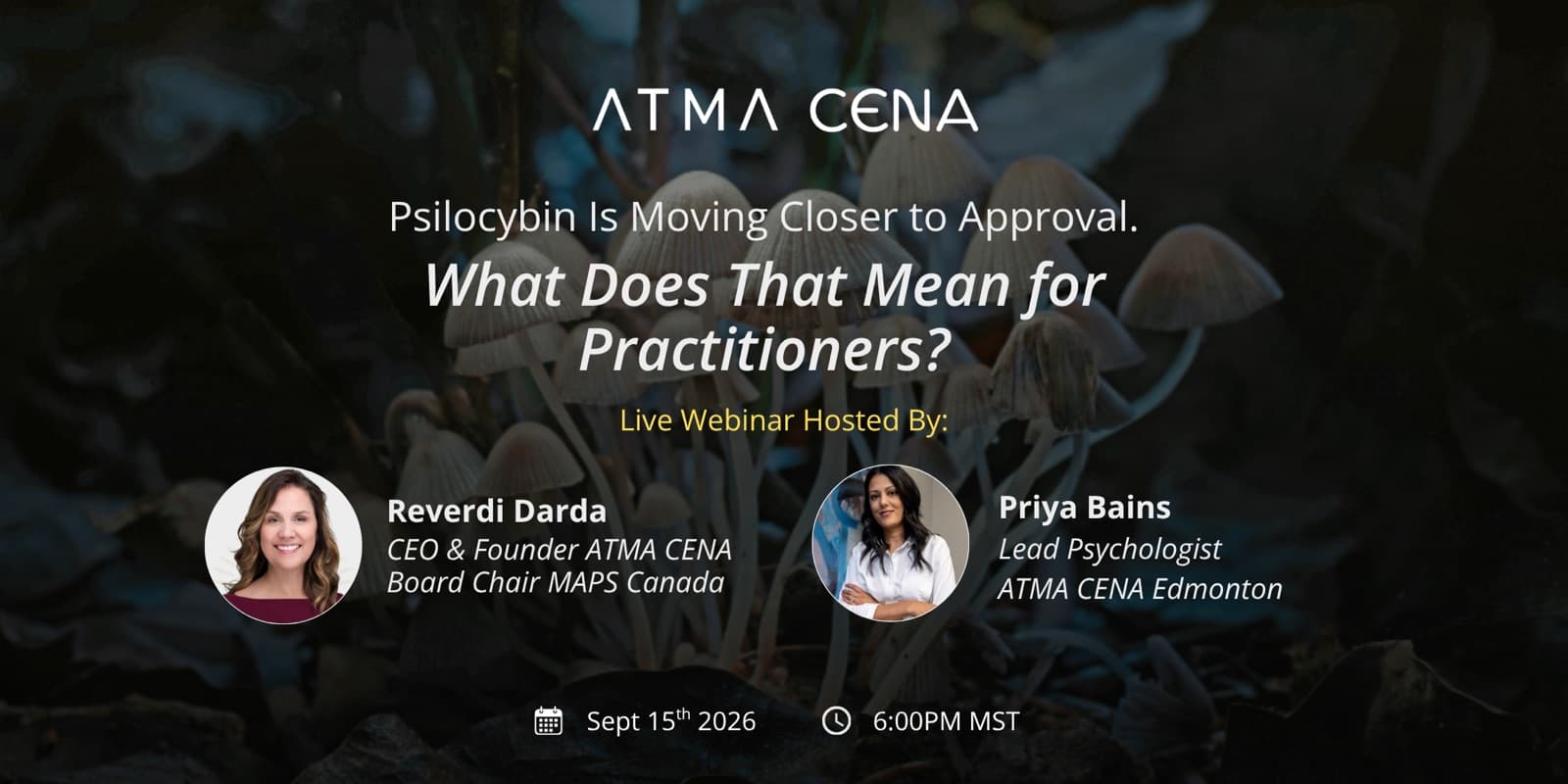
Psilocybin Is Moving Closer to Approval. What Does That Mean for Practitioners?
For years, psychedelic assisted therapy has largely been discussed as something on the horizon. That horizon is getting closer.
Compass Pathways is in the process of submitting its New Drug Application to the FDA for psilocybin-assisted therapy in treatment-resistant depression — the first classic psychedelic ever to reach this point. It carries a priority voucher that can shorten the FDA's review to just one or two months, and on September 14, the FDA is holding a public hearing on the therapeutic use of psychedelic drugs; one more sign of how quickly this field is moving.
If it's approved, and the DEA reschedules, legal psilocybin-assisted therapy could be available in the United States in as little as six months. That would represent a significant shift for the field and for the people who stand to benefit.
Most of the coverage so far has been about medicine. Much less has been said about the room where this care actually happens.
This isn't a prescription you hand to someone. It's one to three guided sessions, each running four to six hours, with a trained practitioner present the whole time. Nothing else in mental healthcare currently works quite this way, which opens up a question well worth exploring together:
Who is actually going to deliver these sessions, and how? And for therapists, prescribers and nurses who want to be part of this field, what will it take to be ready?
Join us
Reverdi Darda and Priya Bains, CEO and Lead Psychologist at ATMA CENA, will walk through where things really stand and what it means for practitioners on both sides of the border. We'll answer the questions we hear most often:
- What happens next with the Compass application, and what should we be watching for?
- What would US approval mean here in Canada?
- Why does a four-to-six-hour session change who can deliver this care?
- Can ketamine clinics simply pivot to psilocybin delivery?
- What does talk therapy look like on the other side of this?
- If you wanted to be ready, what would you need to have done, and by when?
This will be an informal talk, with plenty of room for your questions.
Why we think most of the capacity will come from therapists
The common assumption is that ketamine clinics will simply pivot. We see it a little differently.
A ketamine infusion runs forty to sixty minutes in a medical setting. A psilocybin session runs several hours, in a room someone needs to feel safe enough to be undefended in. Different settings, different staffing, different economics.
We believe the more likely path runs through practices that already exist. Therapists already have the rooms, the relationships, the caseloads, and the containment skills this work calls for, along with a warmer, less clinical environment. What's still needed is the training and the medical oversight structure to deliver it legally, and that's exactly the gap we want to help close.
Who this is for
Psychologists, psychotherapists, social workers, clinical counsellors, physicians, and nurse practitioners — no prior psychedelic training needed. Whether you're already exploring this work or simply want to be ready when your clients ask, this session is for you.