
Psychedelic therapy FAQs: a Canadian patient guide
These are answers to the questions patients ask us most often about psychedelic-assisted therapy (PAT) in Canada: what the process involves, how assessment works, what a medicine session day looks like, what preparation and integration are, how the professionals involved are regulated, and how costs and insurance work for the psychotherapy parts of care. Every person's situation is different, so treat this page as a starting point and talk with a clinician about your own circumstances.
If your question is not answered below, book a free 15-minute information call and ATMA CENA's team will walk you through it directly.
Key points at a glance
- ATMA CENA provides mental health care, including psychedelic-assisted therapy, at clinics in Calgary and Edmonton and through a national member clinic network.
- PAT is a structured process built around psychotherapy: assessment, preparation, a supervised medicine session, and integration.
- A clinician assesses whether PAT, or any other form of care, is appropriate for you. Not everyone is a good fit, and that is part of careful care.
- Care is delivered by regulated health professionals who answer to their provincial professional colleges.
- Fees vary by care plan. Some psychotherapy and assessment services may be eligible under extended health benefits or other coverage programs.
- The first step is a free, no-obligation information call.
Understanding psychedelic-assisted therapy
What is psychedelic-assisted therapy?
Psychedelic-assisted therapy is a form of mental health care that combines psychotherapy with a supervised medicine session. The therapy is the centre of the process. Before the session, you work with a therapist to prepare; during it, a clinical team is with you; afterwards, you meet again to make sense of the experience and connect it to your everyday life. For a fuller overview, see What is psychedelic therapy?
How does the therapy process work?
Most care plans follow the same broad path. You start with an information call, then a clinical assessment. If PAT is a fit, you complete preparation sessions with a therapist, attend one or more supervised medicine sessions, and take part in integration therapy afterwards. Your care team reviews how things are going at each stage and adjusts the plan with you. You can read more about this in how psychedelic-assisted psychotherapy works.
Is psychedelic-assisted therapy recreational?
No. PAT takes place in a clinical setting, with a trained team present, a clear therapeutic purpose and a plan that you agree to in advance. The focus is psychological work supported by your therapist, not a recreational experience. You do not leave the clinic until the team is satisfied you are ready to go home. See Does psychedelic therapy get you high? for more on how clinical care differs from recreational use.
How are psychedelic-assisted therapy providers regulated in Canada?
The nurses, physicians, psychologists, counsellors and other professionals involved in PAT are regulated by their provincial professional colleges, which set standards for scope of practice, consent, documentation and conduct. Clinics are also expected to meet provincial standards for the settings where care is delivered. You can ask anyone on your care team about their credentials and which college they are registered with. ATMA CENA's approach is outlined on our licensing and accreditation page, and our guide on how to vet a Canadian psychedelic clinic lists the questions worth asking.
Wondering if this is right for you?
Talk it through with our clinical team on a free call. No referral needed to start.
Assessment and eligibility
Who is psychedelic-assisted therapy for?
PAT is one of several forms of mental health care that ATMA CENA offers to adults. Whether it suits you depends on your history, your current health, your goals and what other care you have tried. A clinician assesses whether PAT, or another option such as general therapy services, is the right fit for you. There is no single profile, and a decision is made only after a full assessment.
How is eligibility assessed?
Assessment usually includes a review of your mental health and medical history, current medications, substance use history, support system and goals for care. The clinical team may ask for records from your family doctor or other providers. You also need to be able to give informed consent and be willing to take part in preparation and integration sessions. The assessment is a conversation as much as a screening: it is your chance to ask questions and decide whether the process feels right for you.
Who might not be a good fit?
Some health conditions, mental health histories, medications and life circumstances mean PAT is not appropriate, or not appropriate right now. The team looks closely at your physical and mental health history, your family history, your current medications and how stable your life feels right now. If PAT is not a fit, the clinical team will explain why and talk with you about other options. Our article on who might not be a good fit for psychedelic therapy goes into more detail.
Preparation, sessions and integration
What happens during preparation?
Preparation sessions help you build trust with your therapist, clarify your intentions, learn grounding techniques and understand exactly what will happen on the day. You will talk through any worries, agree on consent and boundaries, and plan your support for the days afterwards. See the preparation phase of psychedelic therapy for more.
What is a medicine session day like?
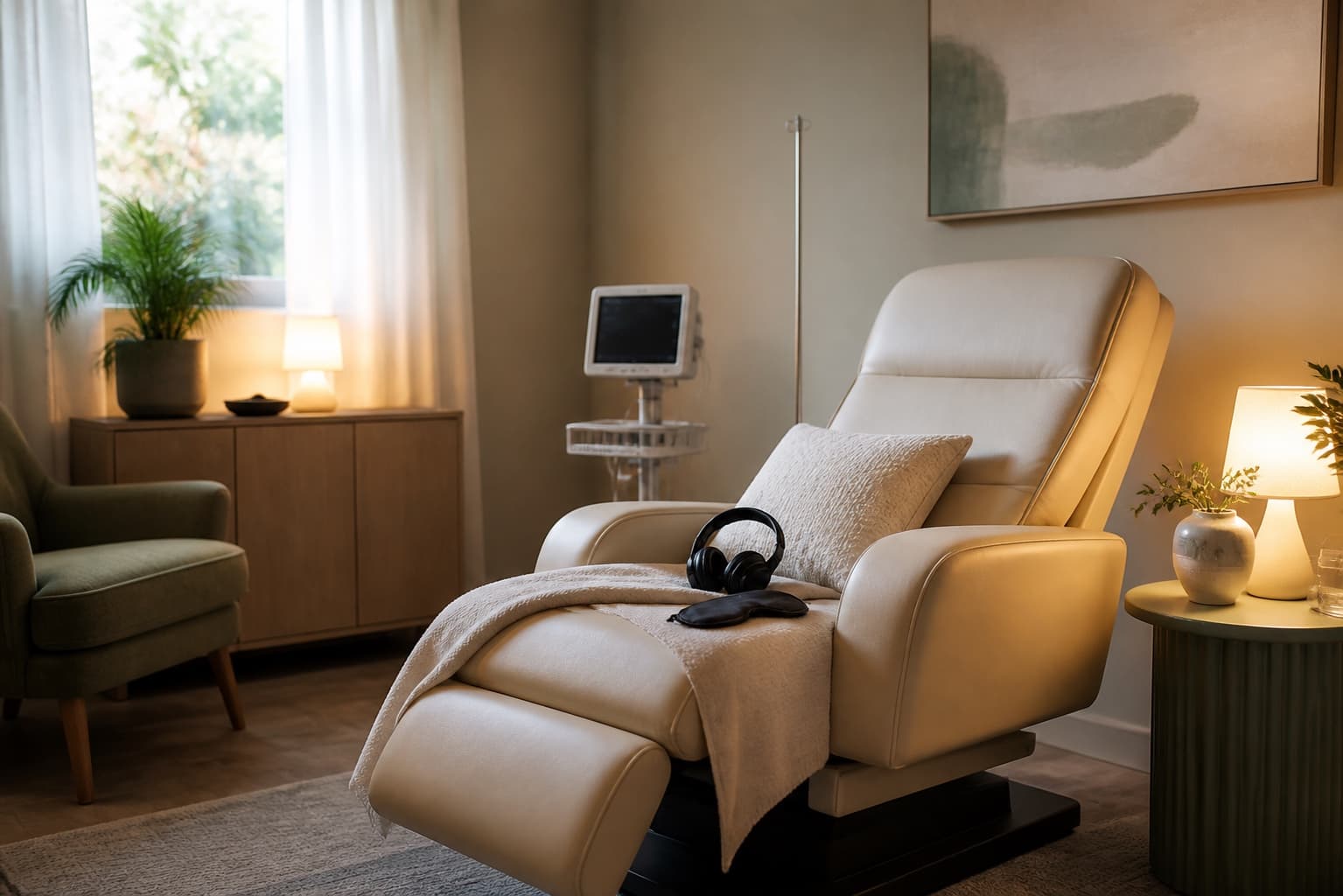
Sessions take place in a quiet, comfortable treatment room. Many people choose to recline, use eye shades and listen to a curated playlist, though you can talk with your clinician about what feels right. A member of the clinical team stays with you throughout, and your vital signs are checked as part of standard monitoring. Plan to spend a few hours at the clinic, arrange for someone to drive you home, and keep the rest of your day free and quiet. Your team will give you written aftercare instructions. For more on the room and the atmosphere, read about set and setting in psychedelic therapy and the length and structure of a session.
How many sessions will I need?
There is no standard number. Your care plan is built around you, and the number of preparation, medicine and integration sessions is decided together with your clinical team based on your assessment, your goals and how the process unfolds. Some people return for follow-up care later on. Your team will review the plan with you regularly rather than committing you to a fixed course.
What is integration, and why does it matter?
Integration is the therapy that follows a medicine session. With your therapist, you reflect on what came up, put words to it and look at how insights might translate into changes in your relationships, habits and daily routines. Integration is where much of the therapeutic work happens, which is why it is a core part of every ATMA CENA care plan. Learn more in the integration phase of psychedelic therapy.
Can my family or partner be involved?
Often, yes. Loved ones can be a valuable part of your support system, especially around the session day and during integration. With your consent, your team can talk about how they can help. Our guide for family members and loved ones is a good place for them to start.
Not sure where to start?
A free 15-minute call clarifies your options and the next steps for your situation.
Costs, insurance and booking
How much does psychedelic-assisted therapy cost?
Fees depend on your care plan, including how many assessment, preparation, session and integration appointments are involved. ATMA CENA provides an itemized quote once your assessment is complete, and a deposit is typically required to begin intake. Fees at other providers vary, so ask any clinic for a written breakdown of what is and is not included before you commit. Our team is happy to go through costs with you on an information call.
Does insurance cover psychedelic-assisted therapy?
Coverage depends on your plan and your circumstances. Psychotherapy and assessment services delivered by regulated professionals are often eligible under extended health benefits, subject to your plan's limits. Some private insurers, workers' compensation boards and Veterans Affairs Canada consider coverage for psychedelic-assisted therapy on a case-by-case basis. Check directly with your insurer before you start. See insurance coverage for psychedelic-assisted therapy in Canada for the broader picture, and our pages on WCB Alberta and Veterans Affairs Canada if those apply to you.
Where can I receive care?
ATMA CENA operates clinics in Calgary and Edmonton, and works with a national network of member clinics across Canada. Your information call is the best place to find out which location suits you.
How do I get started?
Start with a free 15-minute information call. A member of our team will listen to what you are looking for, explain the process, answer questions about costs and coverage, and let you know what the next step would be. There is no obligation to continue.
About the author
Reverdi Darda, RN, BScN, Reg #61707 | CEO & Founder, ATMA CENA
Reverdi Darda, RN is CEO & Founder of ATMA CENA and a Registered Nurse with over three decades of experience in healthcare operations, community engagement, policy development and strategic planning. A recognized leader in mental health access, Reverdi has dedicated her career to thoughtful, person-centred models of care and to policy change that puts patients first. She founded ATMA CENA to expand practitioner and public access to psychedelic-assisted therapy across Canada.
Related reading
Have questions about your situation?
Our team can walk you through eligibility, preparation, and what to expect.
Talk to our team
Have a question we have not covered? Book a free 15-minute information call to talk through your situation with ATMA CENA's team.
Find care near you
Explore ATMA CENA locations across Canada.
- Psychedelic Therapy Edmonton
- Psychedelic Therapy Calgary
- Psychedelic Therapy Hamilton
- Psychedelic Therapy Kitchener-Waterloo
- Psychedelic Therapy London
- Psychedelic Therapy Mississauga
- Psychedelic Therapy Montreal
- Psychedelic Therapy North Bay
- Psychedelic Therapy Sarnia
- Psychedelic Therapy Saskatoon
- Psychedelic Therapy Vaughan
- Psychedelic Therapy Winnipeg