
The Medicine Was Not the Point

CEO & Founder, ATMA CENA · Reg. #61707
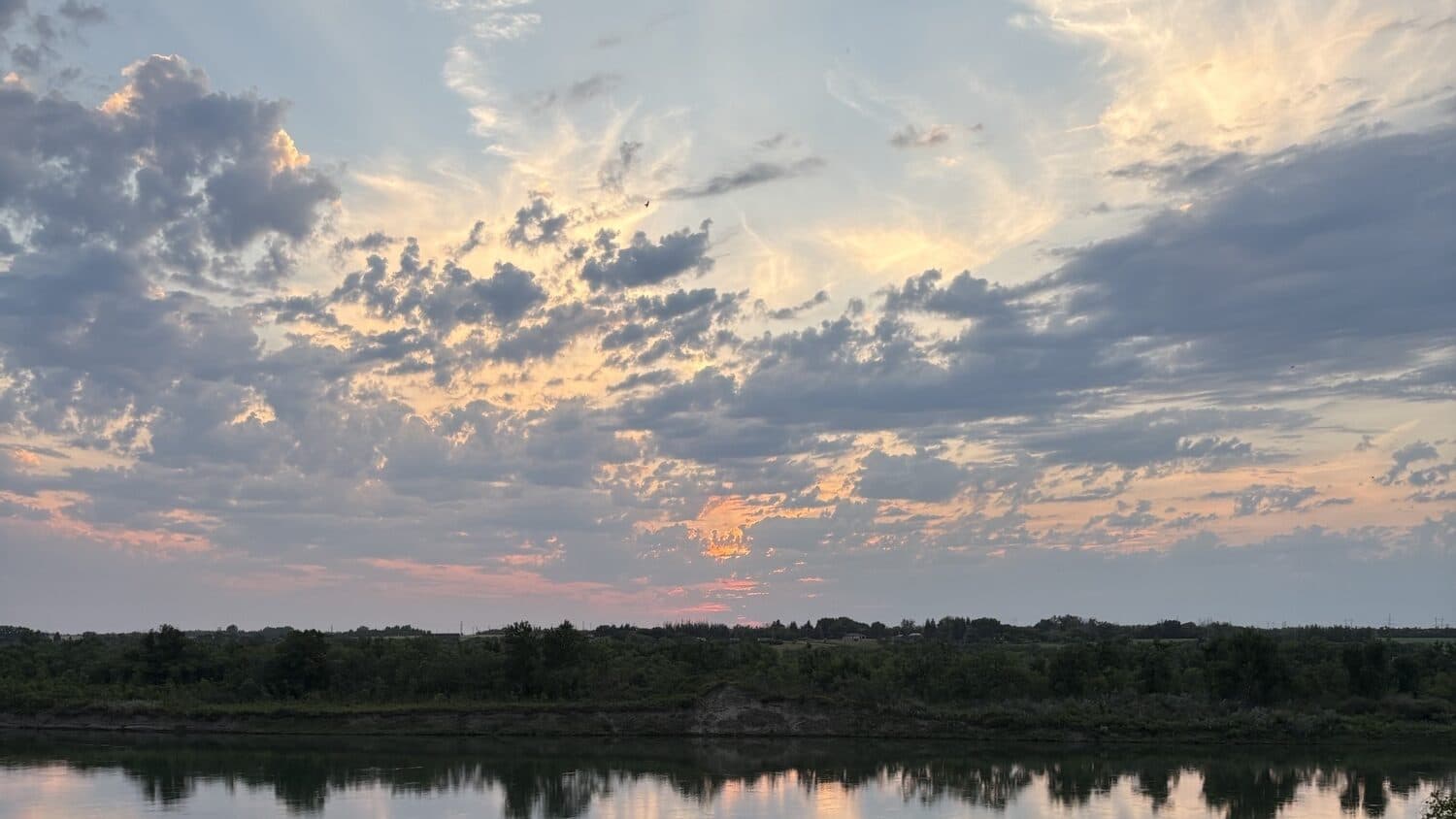
I want to tell you about a weekend I'm still carrying with me.
A few weeks ago, I was invited to the World Intertribal Summit in Saskatchewan, hosted by the Sturgeon Lake First Nation. The invitation came through my role as Chair of MAPS Canada, the national charitable organization supporting psychedelic research, education, access, and community. I said yes without fully knowing what I was saying yes to.
I want to be honest about that. I have spent years in this field. I have sat in rooms with researchers and regulators and clinicians. I built a company. I have a certain confidence about what I know. And I arrived in Saskatchewan not really knowing what to expect.
What I found was a global gathering. Not a Canadian one, there were participants from Peru, Brazil, Mexico, and the United Kingdom. Psychiatrists, psychologists, academics, researchers from across the country. Cultural elders from other nations, carrying knowledge that has travelled a very long way to arrive in a field tent in Saskatchewan. Many of them are people who have taught in our programs, or whose work has shaped what we teach.
And it was held alongside the community's powwow celebration, so the learning was not separate from the living. We were guests inside something that was already happening.
The night
I was invited to take part in a ceremony hosted by the Sturgeon Lake First Nation, extended to both community members and non-community members, Indigenous and non-Indigenous alike. That invitation is not something I take lightly. It was a gift, and it came with responsibility.
I am going to leave most of what happened inside it alone. Some teachings are not mine to pass along, and part of what I learned that weekend is knowing the difference. What I will say is this. It began at sundown and it ended at sunrise. Twelve hours. It tested me physically. It tested me emotionally. It tested me mentally. And that was a good thing.
It was held by elders who have carried this practice for a very long time, in a tradition with more than half a million members across Canada and the United States. That tradition is not a trend, and it is not a modality, it is a living practice with its own protocols, its own protectors, and its own reasons that have nothing to do with clinical outcomes. Sacred medicine was part of it, as it has been for generations.
And here is the most important thing I brought home.
The medicine was not what made the experience.
I have thought about this a great deal since. There were so many ingredients in that room. The people beside me, most of whom I had never met. The elders holding it. The twelve hours it lasted. The intention we each carried in and the intention we carried together. Take any one of those away and it is a different night. The medicine was one ingredient among many.
What it solidified
I went to Saskatchewan as a professional in this field. I came home thinking about something simpler.
Three things kept surfacing for me over that weekend, and they have not left:
- The ability to connect. Real connection, not proximity.
- The ability to feel safe. Safe enough to be tested. Safe enough to be undefended.
- The ability to have a true relational meeting with another person. Not a transaction. Not an assessment of each other. A meeting.
Here is what struck me: none of those are ordinary. We talk about them as though they are baseline human experiences, available to anyone. They are not. Most people move through their days without them. Most people are never invited into a room where all three are present at once. I was invited. Not everyone is. And in those small hours, exhausted but clear, I understood that it placed a responsibility on me.
Teachings
In many First Nations traditions, what a person learns over a life is called a teaching. I have been sitting with that word. It is different from information, the information you receive and file. A teaching is one you carry, and eventually you are meant to pass it on.
The teaching that came most clearly to me that weekend was about intentionality. Moving through the world in a way that treats others as you would want to be treated. Creating respectful places. Helping the person next to you. None of that is new. You have heard versions of it your whole life. But hearing it at three in the morning, from people whose ancestors have practised it for thousands of years, landed differently. In our Western culture we know these things and then we lose them somewhere between the calendar and the inbox.
Afterward, I did what we would call integration in our field. Though a very wise friend gave me better advice and said I should just be. So that is what I have been doing. Not analyzing the weekend. Not extracting the lessons. Being present with my family, with my work, with the fact that I was there at all.
Why I'm telling you this
We are at a strange and important moment. Psychedelic and medicine-assisted therapy is gaining traction. Regulation is arriving. Legalization is moving. The field is becoming mainstream, and with that comes protocol, standardization, credentialing, all of which I believe in, and much of which we have spent years building at ATMA CENA. But I came back from Saskatchewan more convinced than ever of something that does not fit neatly into a protocol.
The cultural, spiritual, and Indigenous ways of being are not an add-on. They are not a module you complete on the way to the clinical content. They are integral to how we hold space and how we support the people who come to us looking to heal.
I said earlier that the medicine was not what made that night. The same is true of our work. The medicine is one ingredient. The rest of it, safety, connection, a genuine relational meeting, intention held over time, that is the practice. That is what a practitioner will bring, and this is where I keep landing. Very few people will ever receive the invitation I received. That opportunity is not available to most, and it should not be sought out or replicated; it was a gift from a community that has protected it carefully.
But the conditions underneath it, that can be built. That can be taught. That can be held in a clinic room in Calgary or Edmonton or anywhere that a well-trained practitioner who is doing this work properly may be. That is the bridge I want to build. So that people who will never receive an invitation like mine still have a way to access this kind of healing, in a form that is safe, legal, supported, and real. I have been humbled to learn how much we are still learning about practices that have existed for thousands of years. What I brought back is not a technique. It is a reminder of what the work asks of us.
Where you come in
If you are reading this, you are somewhere on your own path with this work. Some of you have trained with us. Some of you have been following along for a while, reading, watching, waiting for the right moment. Some of you are further along than I am in ways that I would like to hear about.
Wherever you are: your path is your own, and it is not finished.
What I would say is this, the field needs practitioners who understand that the medicine is one ingredient. People who can hold safety and connection and a true relational meeting. People who take the cultural and spiritual dimensions of this work seriously and not as decoration around the clinical core. And those are the people we want to work alongside.
If something in this letter met you where you are, I would like you to have a conversation with our team. A conversation about where you are, what you are trying to build, and whether what we do is a genuine fit for your practice. Sometimes the honest answer is that it isn't. But I would rather we have the conversation to find that out than keep waiting for a clearer sign.
With gratitude: to the Sturgeon Lake First Nation for their hospitality and their teachings, to the elders who held that ceremony, and to you for reading this far.
Reverdi Darda Co-Founder & CEO, ATMA CENA Chair, MAPS Canada
A note: ATMA CENA does not offer or facilitate ceremonial practice, and nothing in our training leads there. The ceremony described in this letter belongs to the Sturgeon Lake First Nation and to the communities who carry it.
Ready to have that conversation?
Talk with a program advisor about where you are, what you're building, and whether working together is a genuine fit for your practice.
Get trained in ketamine assisted therapy
Explore ATMA CENA locations across Canada.
- Ketamine Therapy Training Edmonton
- Ketamine Therapy Training Calgary
- Ketamine Therapy Training Hamilton
- Ketamine Therapy Training Kitchener-Waterloo
- Ketamine Therapy Training London
- Ketamine Therapy Training Mississauga
- Ketamine Therapy Training Montreal
- Ketamine Therapy Training North Bay
- Ketamine Therapy Training Sarnia
- Ketamine Therapy Training Saskatoon
- Ketamine Therapy Training Vaughan
- Ketamine Therapy Training Windsor
- Ketamine Therapy Training Winnipeg