
Ketamine Therapy Side Effects: What Patients Should Know
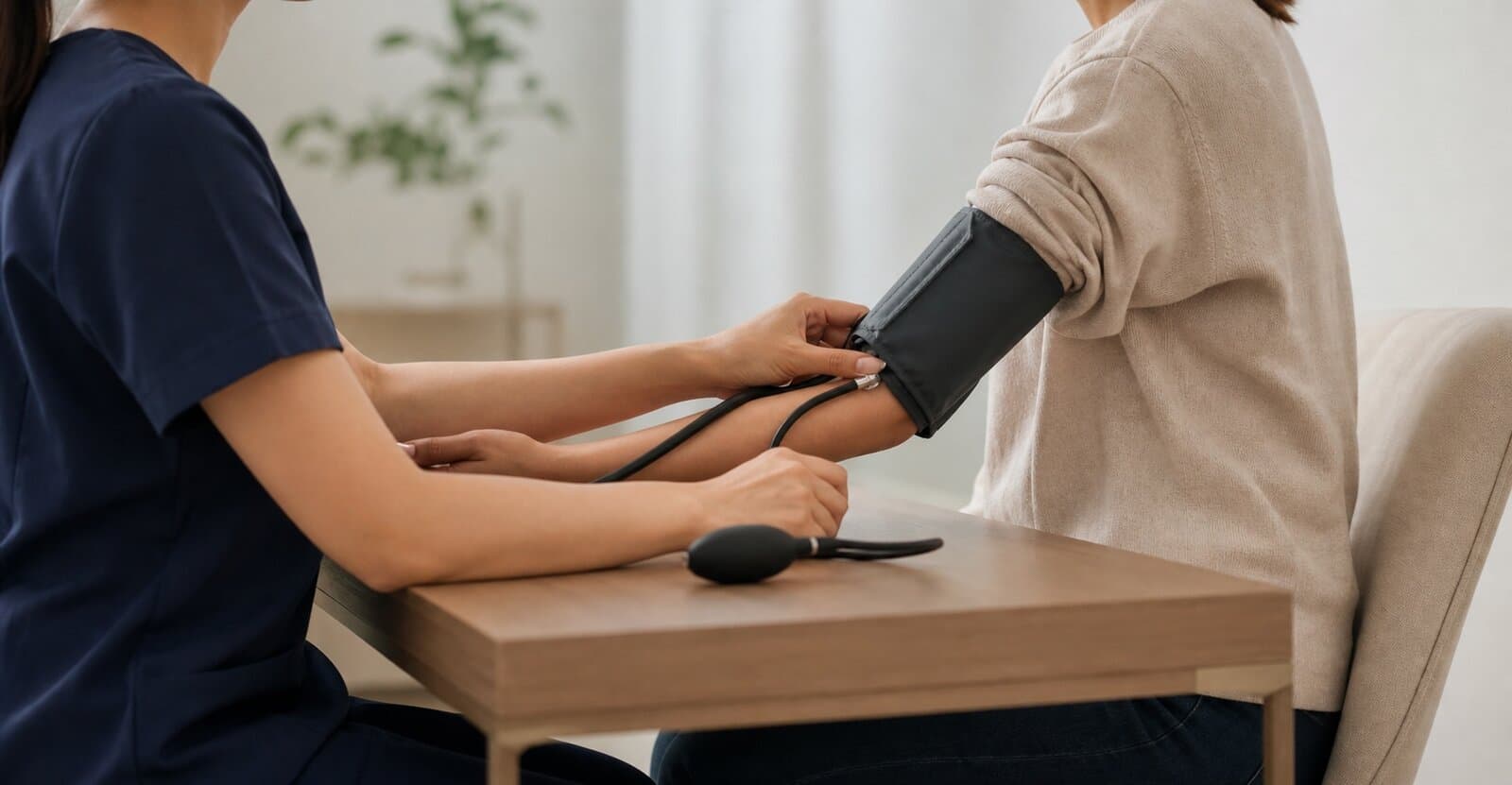
Most side effects of supervised ketamine therapy are mild and short-lived. The common ones, such as dizziness, the dissociative experience, nausea, and a brief rise in blood pressure and heart rate, tend to appear during the dosing session and settle the same day. This article explains the common acute effects, the rarer and more serious considerations, what the long-term evidence shows, and what monitoring looks like in a clinic.
Medically reviewed by Jacque Lovely, RN, MN, MBA, PMP, Reg #74334 on 2026-05-27.
Key takeaways
- Common acute effects are usually transient. In the largest long-term study, dizziness (32.9%), dissociation (27.6%), and nausea (25.1%) were the most common effects, were mostly mild to moderate, and generally resolved the same day [Wajs 2020].
- Ketamine briefly raises blood pressure and heart rate. This is why a clinic checks your vital signs before, during, and after dosing.
- Serious effects are uncommon at supervised therapeutic doses. A one-year study of 802 patients on esketamine reported no cases of interstitial cystitis and no respiratory depression [Wajs 2020].
- Long-term bladder and liver concerns come mainly from chronic recreational misuse, not from supervised therapeutic use. The two patterns of use differ greatly in dose, frequency, and oversight.
- Dependence is a real but managed risk. In-clinic dosing with no take-home medication keeps misuse potential low; a history of ketamine misuse is screened for at intake.
- Ketamine for mental health is off-label in Canada. Health Canada approves ketamine as an anaesthetic; Spravato (esketamine) is approved for treatment-resistant depression.
If you are weighing the safety of ketamine therapy, you can book a free information call to talk through screening and monitoring with ATMA CENA's clinical team.
What does the evidence say about ketamine therapy side effects?
At supervised therapeutic doses, ketamine has a well-characterized short-term safety profile, and most adverse effects are transient. A pooled safety analysis of 205 intravenous ketamine infusions in 97 adults with treatment-resistant depression found ketamine well tolerated, with a low infusion discontinuation rate of 1.95% and no persistent psychotomimetic effects [Wan 2015]. The American Psychiatric Association consensus statement is the standard reference for screening, dosing, and monitoring, and it is frank about both the benefits and the limits of the evidence [Sanacora 2017]. The largest long-term data set, the SUSTAIN-2 study, followed 802 patients on intranasal esketamine plus an oral antidepressant for up to one year. The most common adverse events were dizziness (32.9%), dissociation (27.6%), and nausea (25.1%); most were mild to moderate, transient, and resolved the same day, with no reported cases of interstitial cystitis or respiratory depression [Wajs 2020].
Common acute side effects during and after a session
The effects most people notice happen during the dosing window and fade within a few hours. Here is what is typical.
Dissociation
Dissociation is the feeling of being temporarily disconnected from your body, time, or surroundings. In ketamine therapy it is part of the intended experience rather than a complication, and many people describe it as floating, time slowing, or a softening of emotion. It begins within minutes of dosing and usually settles within 30 to 60 minutes after the dose ends. A small number of people find it distressing rather than helpful; preparation, a calm setting, clinician presence, and grounding techniques are the standard supports, and a later dose can be lowered. For a fuller look at the experience itself, see does ketamine therapy get you high.
Brief rise in blood pressure and heart rate
Ketamine briefly increases sympathetic tone, so blood pressure and heart rate commonly rise during dosing and then return toward baseline within one to two hours. This is the main reason a clinic screens your heart health before treatment and checks your vital signs throughout the session. Vital signs are typically monitored at regular intervals during dosing. Well-controlled blood pressure on medication is generally compatible with treatment; uncontrolled severe hypertension is a reason to delay or avoid it.
Nausea and dizziness
Mild nausea, and occasionally vomiting, can occur during or shortly after dosing. A short pre-treatment fast and anti-nausea medication in the clinic reduce this. Dizziness was the single most common effect in the largest long-term study, affecting about one in three patients, and it is usually mild and brief [Wajs 2020].
Headache, blurred vision, and grogginess
Headache, blurred or doubled vision, and feeling groggy or unsteady are common in the hours after dosing and typically clear the same day. Because coordination and judgment can be affected, you cannot drive after a session and will need someone to take you home.
Anxiety during the experience
Some people, particularly those with high baseline anxiety or a trauma history, feel a surge of anxiety during the peak of the experience. Eye shades, music, a low first dose, and a trained clinician in the room are the standard supports, and intake screening helps identify who may need extra preparation.
Wondering if this is right for you?
Talk it through with our clinical team on a free call. No referral needed to start.
Rarer and more serious considerations
Serious effects are uncommon at supervised therapeutic doses, but it helps to know what they are.
- Marked blood pressure spikes. A sharp, sustained rise in blood pressure is rare and is the reason for continuous monitoring. Clinics set a threshold at which they pause and intervene, and they will explain the readings they watch for in your case.
- Intense or frightening dissociation. Occasionally the experience is overwhelming. It remains time-limited, and the clinical team is present throughout to provide reassurance and grounding.
- Worsening mood or thoughts of self-harm. Although ketamine is studied for depression, any worsening of mood or new thoughts of self-harm in the days after a session should be reported to your clinic right away.
- Respiratory effects. At sub-anaesthetic therapeutic doses respiratory depression is not an expected effect, and the one-year esketamine study reported none [Wajs 2020]. It remains a recognized risk of higher anaesthetic doses, which is part of why dosing is supervised.
Long-term safety: what the evidence supports
The honest framing of long-term safety is that most documented harms come from chronic recreational misuse, not from supervised therapeutic use. The largest long-term therapeutic data set, one year of esketamine in 802 patients, is reassuring on the points patients ask about most [Wajs 2020].
Bladder and cystitis
Ketamine-associated cystitis, including bladder pain and ulceration, was first described in chronic recreational users taking gram-level doses frequently over months to years. That pattern is very different from supervised therapy. The SUSTAIN-2 study reported no cases of interstitial cystitis over up to one year of esketamine dosing [Wajs 2020]. The practical takeaway is that bladder problems are not an established concern at therapeutic supervised doses, though clinics may monitor for urinary symptoms during longer maintenance courses, and you should report any change such as pain or blood in the urine.
Liver and cognition
Liver injury has been linked to repeated high-dose ketamine, mainly in chronic recreational use and in some multi-day infusion protocols for pain, rather than to standard psychiatric dosing. Concerns about cognitive effects also come largely from chronic recreational use; in the one-year esketamine study, cognitive function stayed stable or improved [Wajs 2020]. Clinics may include baseline blood work and ongoing checks for repeated or maintenance dosing.
Dependence and misuse risk
Ketamine has misuse potential, which is greatest with unsupervised recreational use. In supervised in-clinic care at sub-anaesthetic doses with no take-home medication, dependence has not emerged as a clinical problem in published trials. A history of ketamine misuse is typically screened for at intake. Spravato is dispensed only in certified clinical settings with no take-home doses for the same reason.
Not sure where to start?
A free 15-minute call clarifies your options and the next steps for your situation.
How supervised therapy differs from recreational misuse
Most long-term safety worries trace back to recreational misuse. The two situations differ on every variable that matters.
| Factor | Supervised therapy | Recreational misuse |
|---|---|---|
| Dose | Sub-anaesthetic, weight-based | Highly variable, often very high |
| Frequency | A short course, then spaced maintenance if needed | Often daily or several times a day |
| Setting | Monitored clinical facility | Unsupervised |
| Product | Pharmaceutical-grade | Variable, sometimes adulterated |
| Screening | Medical screen and contraindication review | None |
| Cumulative exposure | Limited and clinically managed | Potentially very high over time |
This comparison is not meant to dismiss caution. Long-term maintenance at therapeutic doses still has limited multi-year data, which is why screening, monitoring, and informed consent matter. It is meant to frame the risks accurately.
Have questions about your situation?
Our team can walk you through eligibility, preparation, and what to expect.
What monitoring looks like and when to call your clinic
Safe ketamine therapy is built on screening before treatment and monitoring during and after it. Before your first session, a clinic reviews your heart health and blood pressure, your medications, your substance-use history, and any condition that changes the risk picture. During dosing, the team monitors your vital signs and stays with you. Afterward, you rest until you are steady, and you do not drive that day. For who is and is not a candidate, see how to qualify for ketamine therapy in Canada, and for how a full course is structured, see how many ketamine treatments for depression.
Contact your clinic promptly, or seek emergency care, if after a session you have:
- Confusion or disorientation lasting more than two to three hours
- A blood pressure reading your clinic told you to watch for, or chest pain, shortness of breath, or palpitations
- Severe or persistent nausea or vomiting, or a severe headache that rest does not ease
- Blood in the urine, pain on urinating, or trouble urinating
- Worsening mood, a strong surge of anxiety, or any thoughts of self-harm
If you are in crisis, call or text 9-8-8, Canada's Suicide Crisis Helpline, or go to your nearest emergency department.
Patients who want to understand the safety profile for their own situation can book a free information call to review screening and monitoring with ATMA CENA's clinical team.
Frequently asked questions
What are the most common ketamine therapy side effects?
The most common effects are dizziness, the dissociative experience, nausea, and a brief rise in blood pressure and heart rate, along with headache and grogginess. In the largest long-term study, dizziness affected 32.9% of patients, dissociation 27.6%, and nausea 25.1%, and most effects were mild to moderate, transient, and resolved the same day [Wajs 2020].
How long do ketamine side effects last?
Most acute effects appear during the dosing session and settle within one to two hours after the dose ends, with dissociation usually clearing within 30 to 60 minutes. Grogginess, mild headache, or unsteadiness can last into the same day, which is why you cannot drive and should arrange a ride home.
Can ketamine therapy damage my bladder?
Bladder problems such as ketamine-associated cystitis are documented mainly in chronic recreational users taking large doses frequently over long periods. They have not emerged as a concern at supervised therapeutic doses, and a one-year study of 802 patients on esketamine found no cases of interstitial cystitis [Wajs 2020]. Report any urinary symptoms, especially during longer maintenance courses.
Is ketamine therapy addictive?
Ketamine has misuse potential, mainly with unsupervised recreational use. In supervised in-clinic care at low therapeutic doses with no take-home medication, dependence has not emerged as a problem in published trials. Clinics screen for a history of ketamine misuse at intake, and Spravato is dispensed only in certified settings without take-home doses.
Will ketamine raise my blood pressure?
A brief rise in blood pressure and heart rate is expected during dosing and usually returns toward baseline within one to two hours. Clinics screen your heart health beforehand and monitor your vital signs throughout. Well-controlled blood pressure is generally compatible with treatment; uncontrolled severe hypertension is a reason to delay or avoid it.
Is dissociation a side effect or part of the treatment?
Dissociation is part of the intended ketamine experience rather than a complication. It is time-limited, usually clearing within 30 to 60 minutes after dosing, and it is supported by preparation, setting, and clinician presence. People with severe baseline dissociative symptoms are screened at intake, because for them the experience may be distressing.
Are the side effects different with Spravato?
Spravato (intranasal esketamine) has a similar profile, with dissociation, dizziness, sedation, nausea, and a transient rise in blood pressure being the common effects, and it requires in-clinic observation after each dose. Spravato is the form studied in the one-year SUSTAIN-2 safety data set [Wajs 2020]. It is approved in Canada for treatment-resistant depression, which is a narrower approval than the off-label uses of racemic ketamine.
Compliance disclaimer
This article is educational and is not medical advice. Ketamine is approved by Health Canada as an anaesthetic. Its use for depression, anxiety, post-traumatic stress disorder, and other mental-health conditions is off-label, regulated by provincial medical regulators such as the College of Physicians and Surgeons of Alberta, the College of Physicians and Surgeons of Manitoba, the College of Physicians and Surgeons of Ontario, and the College of Physicians and Surgeons of British Columbia. Esketamine (Spravato) is approved by Health Canada for treatment-resistant depression in combination with an oral antidepressant, and is delivered only in certified clinical settings with post-dose monitoring. A separate indication for depression with acute suicidal ideation exists in the United States but is not a confirmed Health Canada indication as of 2026-05-27. Nothing here should be taken as a clinical recommendation for any individual; treatment decisions belong with a qualified prescribing physician.
About the author
Reverdi Darda, RN, BScN, Reg #61707 | CEO & Founder, ATMA CENA
Reverdi Darda, RN is CEO & Founder of ATMA CENA and a Registered Nurse with over three decades of experience in healthcare operations, community engagement, policy development, and strategic planning. A recognized leader in mental health access, Reverdi has dedicated her career to advancing evidence-based treatment models and advocating for policy change that prioritizes effective care. She founded ATMA CENA to expand practitioner and public access to psychedelic-assisted therapy across Canada.
Sources
- Wan LB, Levitch CF, Perez AM, et al. (Murrough JW) (2015). Ketamine safety and tolerability in clinical trials for treatment-resistant depression. J Clin Psychiatry, 76(3):247-252. https://pubmed.ncbi.nlm.nih.gov/25271445/
- Sanacora G, Frye MA, McDonald W, et al. (2017). A consensus statement on the use of ketamine in the treatment of mood disorders. JAMA Psychiatry, 74(4):399-405. https://pubmed.ncbi.nlm.nih.gov/28249076/
- Wajs E, Aluisio L, Holder R, et al. (2020). Esketamine nasal spray plus oral antidepressant in patients with treatment-resistant depression: SUSTAIN-2, a long-term, open-label safety study. J Clin Psychiatry, 81(3):19m12891. https://pubmed.ncbi.nlm.nih.gov/32316080/
- Andrashko V, Novak T, Brunovsky M, et al. (2020). The antidepressant effect of ketamine is dampened by concomitant benzodiazepine medication. Front Psychiatry, 11:844. https://pubmed.ncbi.nlm.nih.gov/33005153/
- Health Canada (2022). Health Product InfoWatch: ketamine. https://www.canada.ca/en/health-canada/services/drugs-health-products/medeffect-canada/health-product-infowatch/march-2022.html
- College of Physicians and Surgeons of Alberta. Ketamine prescribing, administration and oversight expectations. https://cpsa.ca/physicians/standards-of-practice/
- College of Physicians and Surgeons of British Columbia. Ketamine administration guidance. https://www.cpsbc.ca/
- Government of Canada. 9-8-8 Suicide Crisis Helpline. https://988.ca/
- ATMA CENA. Information call. https://atmacena.com/information-call/
Related articles in this cluster
- Ketamine Therapy in Canada (Hub) (parent hub)
- Does Ketamine Therapy Get You High?: the dissociative experience explained
- How to Qualify for Ketamine Therapy in Canada: eligibility and contraindications
- How Many Ketamine Treatments for Depression?: what a full course looks like
Find care near you
Explore ATMA CENA locations across Canada.
- Ketamine Therapy Edmonton
- Ketamine Therapy Calgary
- Ketamine Therapy Hamilton
- Ketamine Therapy Kitchener-Waterloo
- Ketamine Therapy London
- Ketamine Therapy Mississauga
- Ketamine Therapy Montreal
- Ketamine Therapy North Bay
- Ketamine Therapy Sarnia
- Ketamine Therapy Saskatoon
- Ketamine Therapy Vaughan
- Ketamine Therapy Winnipeg