
Does Ketamine Therapy Get You High? An Honest Patient Guide (2026)
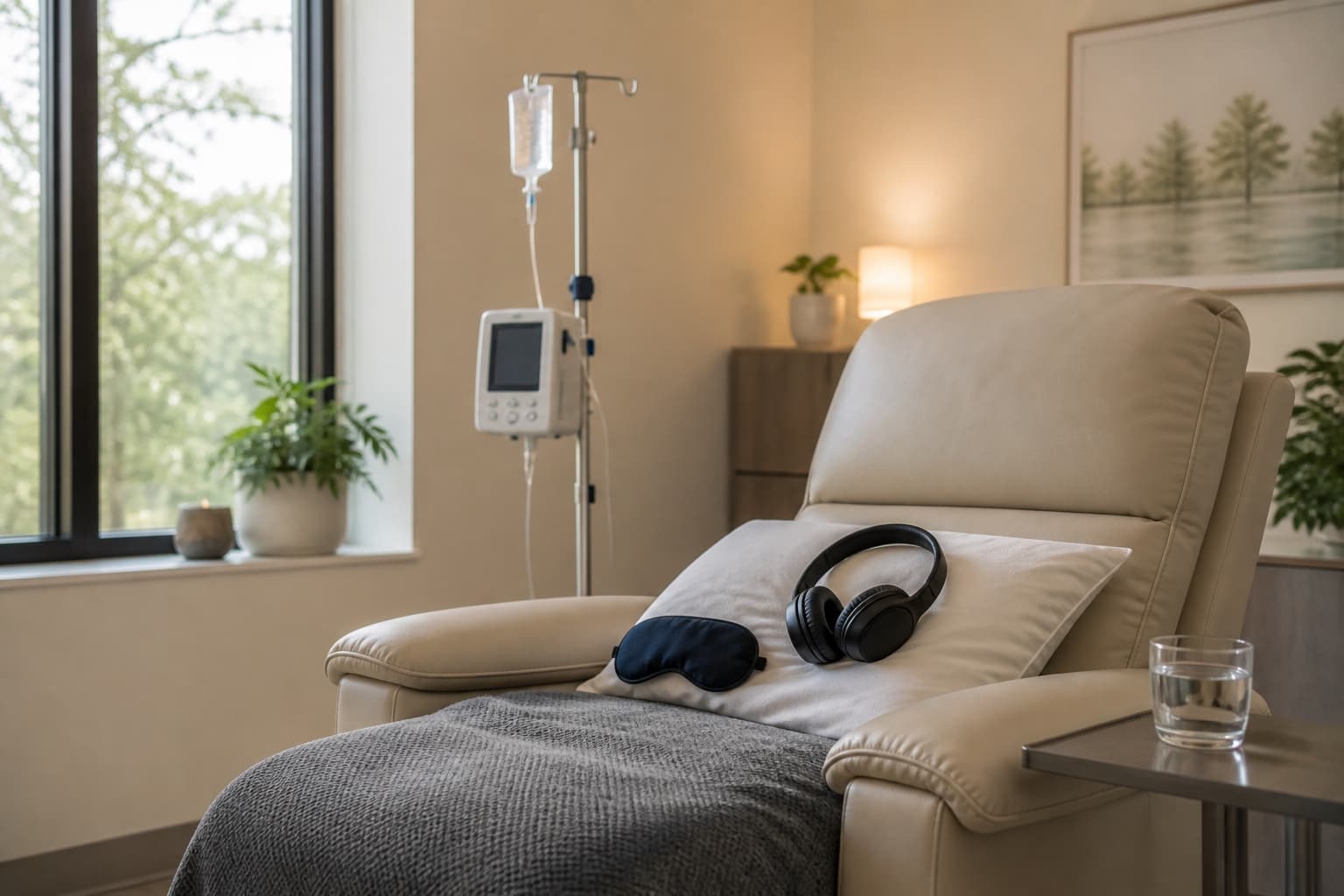
Ketamine therapy produces an altered state of consciousness at sub-anaesthetic clinical doses, but calling that state a "high" misrepresents what actually happens. In a supervised clinical setting in Canada, the experience is called dissociation: a temporary, time-limited shift in perception that resolves before you leave the clinic, administered off-label for mental-health indications by a licensed prescriber under provincial medical-regulator oversight.
Medically reviewed by Jacque Lovely, RN, MN, MBA, PMP, Reg #74334 on 2026-05-27.
Key takeaways
- Ketamine at therapeutic doses produces dissociation, a distinct clinical experience, not recreational intoxication or euphoria.
- Patients commonly report altered time perception, a floating quality, mild visual shifts, emotional softening, and a sense of distance from habitual thoughts (van Schalkwyk et al., 2018).
- The acute experience typically lasts 45 to 90 minutes and resolves before you leave the clinic.
- Therapeutic and recreational ketamine differ in dose, setting, supervision, and integration support, not just one variable.
- Bladder and hepatic toxicity linked to ketamine are associated with high-frequency, high-dose recreational exposure, not supervised clinical dosing.
- Racemic ketamine for psychiatric use is off-label in Canada. Spravato (intranasal esketamine) is Health Canada-approved for treatment-resistant MDD only. These are different products with different regulatory status.
Patients with questions about what the ketamine experience feels like for their specific situation can book a free 15-minute information call with ATMA CENA's clinical team.
The short answer, and why "high" does not fit
Ketamine therapy in a clinical setting produces dissociation, a temporary altered state where ordinary boundaries between self and environment soften. This is the mechanism behind ketamine's rapid antidepressant effect, not a side effect to be suppressed or a recreational thrill to be sought. The word "high" implies euphoria, intoxication, and pleasure-seeking. Those connotations misrepresent the clinical experience.
Atomic answer. At sub-anaesthetic clinical doses in a supervised setting, ketamine produces a dissociative state rather than a recreational high. Patients typically describe floating, mild perceptual shifts, emotional distance from distressing thoughts, and a dreamlike calm. The experience is intentional and time-limited: it usually lasts 45 to 90 minutes and fully resolves before the patient leaves the clinic. What separates clinical from recreational use is not only dose but the entire context: a screened patient, a physician-supervised protocol, a prepared therapeutic environment, and structured integration sessions before and after dosing. The dissociation is a feature of the mechanism, not the goal. The goal is lasting relief from conditions like treatment-resistant depression or PTSD.
What ketamine does to your brain
Ketamine works primarily as an NMDA (N-methyl-D-aspartate) receptor antagonist. The foundational 1994 Krystal et al. trial gave 19 healthy adults sub-anaesthetic ketamine and documented "a broad range of symptoms…that resemble aspects of dissociative states" (Krystal et al., 1994).
At the neurochemical level, NMDA antagonism triggers a downstream surge of glutamate, AMPA receptor activation, and BDNF release. This cascade drives synaptogenesis, the formation of new neural connections, within 24 to 72 hours of a dose (Kang et al., 2022; Zanos and Gould, 2018). The dissociative experience and the antidepressant effect emerge from related neural processes; one does not occur without the other.
The dose governs the character of the experience. Anaesthetic doses produce unconsciousness. Sub-anaesthetic clinical doses produce dissociation while preserving consciousness, communication, and responsiveness. Recreational doses typically sit higher on this curve than therapeutic doses but lower than anaesthetic, and are taken without screening, monitoring, or the therapeutic container that shapes how the experience unfolds.
What the experience actually feels like
Clinical and qualitative research documents what patients commonly describe. These are group-level findings, not individual guarantees.
In a mixed-methods analysis of 110 patients receiving intravenous ketamine for mood disorders, van Schalkwyk et al. (2018) found that five of the six highest-loading items involved perceptual disturbances of time or sensation; in-depth interviews also identified disinhibition and a sense of peace (van Schalkwyk et al., 2018). A 2024 qualitative study of intravenous ketamine in patients with alcohol use disorder found the most frequently assigned themes were "Meaningful, spiritual, and mystical experiences," "Positive affect," and "Inherent contradictions of the acute experience" (Terasaki, 2024).
Patient descriptions cluster around several categories:
- Time distortion: minutes feeling like hours, or an hour feeling brief.
- Floating or weightlessness: a sense of physical buoyancy or ungroundedness.
- Mild visual or auditory shifts: soft colours behind closed eyes, geometric patterns, music sounding more vivid.
- Emotional softening: distance from anxious or depressive thoughts; feelings observed rather than felt from inside.
- Sense of peace or quiet: calm that some patients describe as distinct from sedation.
- Spontaneous insight: connections to memories, relationships, or recurring patterns surfacing without effort.
- Inherent contradictions: described as "everything and nothing at once" or "lonely yet connected."
Not every patient has every experience. Some find the session profoundly meaningful; others find it simply calm; a smaller number find it unsettling, particularly when processing difficult material. The acute experience typically lasts 45 to 90 minutes and resolves within the post-session monitoring window.
Wondering if this is right for you?
Our clinical team can walk you through your options — no referral needed to start.
Will you hallucinate? What about a bad trip?
Sub-anaesthetic clinical doses of ketamine do not reliably produce full hallucinations. Mild perceptual shifts, such as soft colours, geometric patterns, or altered time perception, are common. Full loss of contact with reality is rare at therapeutic doses with proper screening.
The "bad trip" framing belongs to recreational contexts. In clinical settings, two structural factors reduce the risk of a difficult experience becoming destabilizing:
- Set and setting are managed. Patients are screened for psychiatric stability. Preparation sessions establish intentions and address anxieties before dosing. The treatment environment is calm, controlled, and predictable. The clinical team is present throughout.
- Difficult material is anticipated and held. When emotional or memory content surfaces during a session, the therapist's role is to support processing, not minimize it. Integration sessions afterwards translate the experience into sustained behavioural change.
Hartogsohn (2016) framed this pharmacologically: "set and setting theory is primarily prescriptive, educating therapists and users on how to control and optimize the effects of drugs" (Hartogsohn, 2016). A 2020 systematic review of 34 experimental studies concluded that with proper screening, preparation, supervision, and integration, "limited aversive side effects were noted by study participants" (Aday et al., 2020).
Therapeutic ketamine vs recreational ketamine, four differences
Two parameters are pharmacological; two are contextual. All four compound.
| Variable | Recreational ketamine | Therapeutic ketamine |
|---|---|---|
| Dose | Uncontrolled; often gram-level quantities; escalating with tolerance | Clinician-calibrated to body weight; sub-anaesthetic; not user-determined |
| Setting | Variable; often unmonitored; sometimes combined with other substances | Clinical environment; vital-sign monitoring; trained team present |
| Supervision | Self-administration or peer; no medical screening | Physician or NP prescribing; clinical staff during session; pre-screening |
| Integration | None typically | Structured pre- and post-session psychotherapy in ketamine-assisted psychotherapy models |
Sassano-Higgins et al. (2016) document that recreational use is associated with "disinhibition and altered sensory perceptions [that] put users at risk of environmental harm", a risk pattern that clinical protocols are specifically designed to prevent (Sassano-Higgins et al., 2016).
Watch out: Recreational ketamine and clinical ketamine share a molecule but not a context. Accounts of recreational ketamine experiences, including the "k-hole" (a deeply dissociated state associated with high recreational doses), do not describe what patients experience at sub-anaesthetic therapeutic doses.
Is dissociation dangerous? What it does for healing
The word "dissociation" can feel alarming. In everyday speech it can imply disorientation; in psychiatry it sometimes refers to trauma-driven detachment. The dissociation produced by ketamine at therapeutic doses is neither of these things.
Pharmacologically, sub-anaesthetic ketamine dissociation is a temporary state in which the normal integration between sensory input and self-referential processing is briefly disrupted. Patients can communicate, they are aware of the room and the clinician, and they are not unconscious. The experience resolves within hours.
There is a clinical hypothesis that the dissociative window itself contributes to therapeutic benefit: a temporary distance from habitual self-referential thinking may create an opening for new patterns to form. Roseman et al. (2018) showed in psilocybin trials that the intensity of "oceanic boundlessness" during dosing predicted antidepressant outcomes (Roseman et al., 2018); Murphy et al. (2022) found that therapeutic alliance strength predicted both the quality of the acute experience and final depression scores (Murphy et al., 2022). The dissociative state appears to interact with the therapeutic relationship in ways ordinary pharmacology does not fully capture.
Dissociation is not psychosis. Active psychosis or schizophrenia spectrum disorder is an absolute contraindication to ketamine therapy because the clinical team needs to be confident that any altered-state experience is the controlled, time-limited dissociation that ketamine reliably produces.
Wondering if this is right for you?
Our clinical team can walk you through your options — no referral needed to start.
Is ketamine therapy addictive?
At therapeutic doses in supervised clinical contexts, dependency risk is low. The pattern that drives ketamine addiction, frequent unsupervised use at high doses over months or years, does not occur in clinical protocols. Sessions are scheduled, doses are calibrated, the substance is administered by clinicians, and patients do not have access to ketamine between sessions.
The CANMAT 2021 task force noted that misuse risk should be assessed but considers it manageable in well-screened patients on standard protocols (Swainson et al., 2021). Active ketamine use disorder is an absolute contraindication. For patients with histories of other substance use disorders, eligibility is assessed case by case after a period of stability.
A systematic review of oral ketamine in depression and pain found the drug "appears well tolerated" at described clinical doses, while flagging the field's need for more rigorous longer-term safety data (Schoevers et al., 2016).
Is ketamine therapy safe? Short-term and long-term data
At sub-anaesthetic doses with proper screening, ketamine has a well-established short-term safety profile. A pooled safety analysis of 205 intravenous infusions in 97 patients with treatment-resistant depression found ketamine "safe and well tolerated"; haemodynamic changes were transient; no persistent psychotomimetic effects or increased substance use were observed at long-term follow-up (Wan et al., 2015).
For Spravato (intranasal esketamine, Health Canada-approved for treatment-resistant MDD), the SUSTAIN-2 long-term safety study followed 802 patients for up to a year. Adverse effects including dissociation were predominantly mild to moderate, occurred on dosing days, and resolved rapidly; no cases of interstitial cystitis or respiratory depression were observed (Wajs et al., 2020).
The 2017 American Psychiatric Association consensus statement on ketamine in mood disorders recommends careful patient selection and structured clinical oversight given the drug's complex risk-benefit profile (Sanacora et al., 2017).
Common short-term side effects in supervised settings:
- Dissociation during the dosing window (intended and expected)
- Mild nausea
- Transient, usually mild elevation in blood pressure (commonly in the range of 10 to 30 mmHg) and heart rate
- Dizziness or unsteadiness
- Headache
These resolve within the post-session monitoring window. Patients cannot drive for at least 24 hours after a session.
The bladder, the liver, and the recreational distinction
Ketamine-associated bladder damage (ulcerative cystitis) was first documented in case series of chronic recreational users consuming gram-level quantities frequently over extended periods (Shahani et al., 2007). A comprehensive review found that "regular ketamine consumption has been shown to increase the risk of cystitis symptoms by 3- to 4-fold, and cessation of ketamine use is usually associated with improvement of symptoms" (Anderson et al., 2022). Ketamine-induced cholangiopathy has also been documented in chronic heavy recreational users, often co-occurring with the bladder findings (Nazir et al., 2025).
These toxicities are linked to dose, frequency, and duration of exposure that far exceed clinical protocols. SUSTAIN-2 (n=802, up to one year) observed no cases of interstitial cystitis. Extended ketamine exposure carries hepatotoxicity and cholangiopathy risk, so baseline and ongoing liver-function monitoring may be appropriate for patients receiving ongoing maintenance treatment over longer time horizons. Patients with pre-existing urological or hepatic conditions should discuss this explicitly with the prescribing physician at intake.
Wondering if this is right for you?
Our clinical team can walk you through your options — no referral needed to start.
What to expect at a session, before, during, and after
Before. Patients arrive and follow any eating or medication instructions provided in advance. Vitals are checked. The clinical team reviews intentions and any specific concerns, and confirms the plan for the session.
During. The medicine is administered according to the modality set out in the care plan. ATMA CENA offers intranasal esketamine (Spravato, at Spravato-certified settings), compounded intranasal ketamine, intramuscular injection, and oral formulations. Effects begin within minutes to roughly half an hour depending on the route. The acute experience commonly lasts 45 to 90 minutes. The clinical team stays present throughout, and monitoring is continuous. Patients can communicate and ask questions; some prefer eye shades and music, while others remain in conversation with the therapist.
After. Patients rest in a recovery setting for another 30 to 60 minutes. Spravato requires a minimum two-hour post-dose observation per Health Canada's label. Vitals are rechecked. The clinical team confirms the patient is stable before discharge. Patients cannot drive for at least 24 hours and need an escort home.
Integration. In the days and weeks following each dose, integration sessions with the therapist process material that surfaced during the experience. A 2017 trial demonstrated that adding 12 weeks of CBT after a four-session ketamine course extended antidepressant durability: relapse occurred in about 25% of responders by week 8, compared with substantially higher rates in comparable ketamine-only protocols (Wilkinson et al., 2017).
Who is a good candidate, and who should think carefully
Ketamine therapy is most established for treatment-resistant major depressive disorder. Other indications (PTSD, anxiety, OCD, chronic pain) are evaluated individually.
Conditions that typically disqualify treatment include active psychosis or schizophrenia spectrum disorder, uncontrolled severe hypertension, severe cardiovascular disease, increased intracranial pressure, current pregnancy, known anaphylactic reaction to ketamine, active manic episode, and active ketamine use disorder.
Conditions requiring careful individual assessment include history of substance use disorder, severe personality disorder with marked instability, recent stroke, untreated severe sleep apnea, and concurrent use of MAOIs or high-dose benzodiazepines. For full eligibility detail, see How to Qualify for Ketamine Therapy in Canada.
Patients who are anxious about the dissociative experience, who have a strong aversion to altered states, or who are processing significant unresolved trauma should discuss those factors with the clinical team during intake. The screening process exists to match patients with the modality and care plan most likely to benefit them.
For questions about whether ketamine therapy fits your situation, book a free 15-minute information call with ATMA CENA's clinical team.
Frequently asked questions
Does ketamine therapy make you feel high?
Ketamine produces an altered state called dissociation at therapeutic doses, but the word "high" carries recreational connotations that do not fit the clinical context. Doses are calibrated for therapeutic effect, not euphoria; the setting is supervised; the goal is psychological processing, not intoxication. The dissociative experience resolves within hours and patients return to ordinary cognition before leaving the clinic.
What does ketamine therapy feel like?
Patients commonly describe altered time perception, a floating or dreamlike quality, mild visual or auditory shifts, emotional softening, and a sense of distance from habitual thought patterns. Clinical literature documents these as expected aspects of the dissociative state at sub-anaesthetic doses. The experience is highly individual.
Is ketamine therapy a psychedelic?
Ketamine is technically classified as a dissociative anaesthetic, not a classical psychedelic. Its mechanism (NMDA antagonism) differs from classical psychedelics such as psilocybin (5-HT2A agonism). At sub-anaesthetic doses, however, ketamine produces altered states that share features with classical psychedelic experiences, which is why ketamine-assisted therapy is sometimes grouped under the broader psychedelic-assisted therapy umbrella.
Can ketamine therapy cause hallucinations?
Sub-anaesthetic clinical doses do not reliably produce full hallucinations. Mild perceptual shifts, such as soft colours behind closed eyes, geometric patterns, or altered time perception, are common. Full loss of contact with reality is rare at therapeutic doses with proper screening and a prepared clinical environment.
Can you have a bad trip during ketamine therapy?
The "bad trip" framing is recreational-context language. Difficult experiences during clinical sessions can occur, particularly for patients processing trauma, but the clinical setting is structured to support such experiences rather than amplify them. The therapist is present throughout; integration sessions afterwards translate difficult material into sustained processing.
How long do the effects last?
The acute dissociative experience typically lasts 45 to 90 minutes and resolves before the patient leaves the clinic. Antidepressant effects from a single dose can emerge within 2 to 72 hours and last days to weeks. Patients cannot drive for at least 24 hours after a session.
Is ketamine therapy safe in Canada?
At sub-anaesthetic doses with proper screening and supervised administration, ketamine has a well-established short-term safety profile. Provincial physician colleges (CPSA in Alberta, CPSM in Manitoba, CPSO in Ontario, CPSBC in BC) regulate where and how ketamine can be administered off-label; clinics operating within these standards follow established Canadian medical safety frameworks.
Is ketamine therapy addictive?
At therapeutic doses in supervised clinical contexts, dependency risk is low. The pattern that drives ketamine addiction, frequent unsupervised use at high doses, does not occur in clinical protocols. Active ketamine use disorder is an absolute contraindication for ketamine therapy.
What is the difference between racemic ketamine and Spravato?
Racemic ketamine (the form used in most intravenous, intramuscular, and oral protocols in Canada) is Health Canada-approved as a general anaesthetic. Its use for depression, anxiety, PTSD, and other mental-health indications is off-label. Spravato (intranasal esketamine) is a different product: Health Canada approved it in May 2020 specifically for treatment-resistant major depressive disorder, in combination with an oral antidepressant. Spravato must be administered at a Spravato-certified clinic with a mandatory two-hour post-dose observation window. The two products have different regulatory status, different dosing mechanisms, and different clinical protocols.
Who should not have ketamine therapy?
Absolute contraindications typically include active psychosis or schizophrenia spectrum disorder, uncontrolled severe hypertension, severe cardiovascular disease, increased intracranial pressure, pregnancy, known anaphylactic reaction to ketamine, active manic episode, and active ketamine use disorder. Relative contraindications requiring careful evaluation include history of substance use disorder, severe personality disorder with marked instability, recent stroke, untreated severe sleep apnea, and concurrent MAOIs or high-dose benzodiazepines. The prescribing physician determines eligibility at intake.
Compliance disclaimer
Ketamine and Canadian regulatory status. Racemic ketamine is approved by Health Canada as a general anaesthetic. Use for depression, anxiety, PTSD, and other mental-health indications is off-label, regulated by provincial colleges of physicians and surgeons: the College of Physicians and Surgeons of Alberta (CPSA), the College of Physicians and Surgeons of Manitoba (CPSM), the College of Physicians and Surgeons of Ontario (CPSO), and the College of Physicians and Surgeons of British Columbia (CPSBC), among others. Spravato (intranasal esketamine) is a separate Health Canada-approved product indicated for treatment-resistant major depressive disorder in adults who have not responded adequately to at least two antidepressant courses; it requires administration at a Spravato-certified clinical setting with mandatory in-clinic supervision and a two-hour post-dose monitoring window. Spravato's Health Canada indication is treatment-resistant MDD only; a separate indication for MDD with acute suicidal ideation exists under US FDA approval but has not been confirmed as a Health Canada indication as of 2026-05-27.
This article is educational and does not constitute medical advice or a clinical recommendation for any individual. Clinical decisions belong with a qualified prescribing physician. Nothing in this article should be understood as a guarantee or promise of outcome.
About the author
Reverdi Darda, RN, BScN, Reg #61707 | CEO & Founder, ATMA CENA
Reverdi Darda, RN is CEO & Founder of ATMA CENA and a Registered Nurse with over three decades of experience in healthcare operations, community engagement, policy development, and strategic planning. A recognized leader in mental health access, Reverdi has dedicated her career to advancing evidence-based treatment models and advocating for policy change that prioritizes effective care. She founded ATMA CENA to expand practitioner and public access to psychedelic-assisted therapy across Canada. Read more at /author/reverdi-darda/.
Sources
- ATMA CENA, Ketamine Therapy Hub: https://atmacena.com/ketamine-therapy/
- ATMA CENA, Information Call: https://atmacena.com/information-call/
- Krystal JH, Karper LP, Seibyl JP, et al. (1994). Subanesthetic effects of the noncompetitive NMDA antagonist, ketamine, in humans. Arch Gen Psychiatry. 51(3):199-214. https://pubmed.ncbi.nlm.nih.gov/8122957/
- Zanos P, Gould TD. (2018). Mechanisms of ketamine action as an antidepressant. Mol Psychiatry. 23(4):801-811. https://pubmed.ncbi.nlm.nih.gov/29532791/
- Kang MJY, Hawken E, Vazquez GH. (2022). The mechanisms behind rapid antidepressant effects of ketamine: a systematic review with a focus on molecular neuroplasticity. Front Psychiatry. 13:860882. https://pmc.ncbi.nlm.nih.gov/articles/PMC9082546/
- van Schalkwyk GI, Wilkinson ST, Davidson L, et al. (2018). Acute psychoactive effects of intravenous ketamine during treatment of mood disorders. J Affect Disord. 227:11-16. https://pubmed.ncbi.nlm.nih.gov/29045915/
- Terasaki D. (2024). Acute subjective experiences of intravenous ketamine in patients with alcohol use disorder. Psychedelic Medicine. https://pubmed.ncbi.nlm.nih.gov/40051584/
- Hartogsohn I. (2016). Set and setting, psychedelics and the placebo response. J Psychopharmacol. 30(12):1259-1267. https://pubmed.ncbi.nlm.nih.gov/27852960/
- Aday JS, Mitzkovitz CM, Bloesch EK, et al. (2020). Long-term effects of psychedelic drugs: a systematic review. Neurosci Biobehav Rev. 113:179-189. https://pubmed.ncbi.nlm.nih.gov/32194129/
- Sassano-Higgins S, Baron D, Julayanont P, et al. (2016). Ketamine misuse, abuse and diversion. Depress Anxiety. 33(8):719-726. https://pubmed.ncbi.nlm.nih.gov/27328618/
- Wan LB, Levitch CF, Perez AM, et al. (2015). Ketamine safety and tolerability in clinical trials for treatment-resistant depression. J Clin Psychiatry. 76(3):247-52. https://pubmed.ncbi.nlm.nih.gov/25271445/
- Wajs E, Aluisio L, Holder R, et al. (2020). Esketamine nasal spray plus oral antidepressant in patients with treatment-resistant depression: assessment of long-term safety in a Phase 3, open-label study (SUSTAIN-2). J Clin Psychiatry. 81(3):19m12891. https://pubmed.ncbi.nlm.nih.gov/32316080/
- Sanacora G, Frye MA, McDonald W, et al. (2017). A consensus statement on the use of ketamine in the treatment of mood disorders. JAMA Psychiatry. 74(4):399-405. https://pubmed.ncbi.nlm.nih.gov/28249076/
- Schoevers RA, Chaves TV, Balukova SM, et al. (2016). Oral ketamine for the treatment of pain and treatment-resistant depression. Br J Psychiatry. 208(2):108-113. https://pubmed.ncbi.nlm.nih.gov/26834167/
- Shahani R, Streutker C, Dickson B, Stewart RJ. (2007). Ketamine-associated ulcerative cystitis: a new clinical entity. Urology. 69(5):810-812. https://pubmed.ncbi.nlm.nih.gov/17482909/
- Anderson DJ, Al-Mahdi R, Shaw N, Leung E. (2022). Ketamine-induced cystitis: a narrative review of an increasingly common condition. Health Psychol Res. 10(3):37495. https://pubmed.ncbi.nlm.nih.gov/36118982/
- Nazir A, Jaishankar GB, Rehman U, et al. (2025). Ketamine-induced cholangiopathy and biliary disease. StatPearls. https://pubmed.ncbi.nlm.nih.gov/41583258/
- Roseman L, Demetriou L, Wall MB, et al. (2018). Increased amygdala reactivity following psilocybin therapy is associated with antidepressant outcomes. Front Pharmacol. 8:974. https://www.frontiersin.org/articles/10.3389/fphar.2017.00974/full
- Murphy R, Kettner H, Zeifman R, et al. (2022). Therapeutic alliance and rapport modulate responses to psilocybin-assisted therapy for depression. Front Pharmacol. 12:788155. https://pubmed.ncbi.nlm.nih.gov/35431912/
- Wilkinson ST, Toprak M, Turner MS, et al. (2017). A survey of the clinical, off-label use of ketamine as a treatment for psychiatric disorders. Psychother Psychosom. 86(3):177-178. PMC5516265. https://pmc.ncbi.nlm.nih.gov/articles/PMC5516265/
- Swainson J, Thomas RK, Archer S, et al. (2021). Racemic and S-ketamine for treatment-resistant major depressive disorder. Can J Psychiatry. 66(3):237-246. https://pubmed.ncbi.nlm.nih.gov/33174760/
Related articles in this cluster
- Ketamine Therapy in Canada: parent hub; overview of ketamine-assisted therapy across Canada
- What Is Ketamine Therapy?: foundational explainer on the treatment model
- Ketamine Therapy Side Effects: full evidence-based safety and side-effects breakdown
- How Many Ketamine Treatments Do You Need for Depression?: dosing schedules and maintenance protocols
- How to Qualify for Ketamine Therapy in Canada: eligibility criteria, contraindications, screening process
Find care near you
Explore ATMA CENA locations across Canada.
- Ketamine Therapy Edmonton
- Ketamine Therapy Calgary
- Ketamine Therapy Hamilton
- Ketamine Therapy Kitchener-Waterloo
- Ketamine Therapy London
- Ketamine Therapy Mississauga
- Ketamine Therapy Montreal
- Ketamine Therapy North Bay
- Ketamine Therapy Sarnia
- Ketamine Therapy Saskatoon
- Ketamine Therapy Vaughan
- Ketamine Therapy Windsor
- Ketamine Therapy Winnipeg